Asset Management: Definition, Process, and How it Works

Asset management refers to the process of maintaining a company’s assets to maximize their value and performance. As a business owner, you must understand how it works in building a strong portfolio. Whether you are seeking accounting service for startup ventures or managing established funds, understanding these principles is vital.
Hence, stay till the end of this article to acquire knowledge on what is asset management, the role of asset managers, different types of asset managers, cost, process, and a detailed example.
- What is Asset Management?
- What is the Role of Asset Managers?
- What are the Different Types of Asset Managers?
- How Does Asset Management Work?
- What is the Cost of Asset Management?
- A Detailed Example of an Asset Management Company
- What is the Difference Between Asset Management and Wealth Management?
- Wrapping Up!
- Frequently Asked Questions
What is Asset Management?
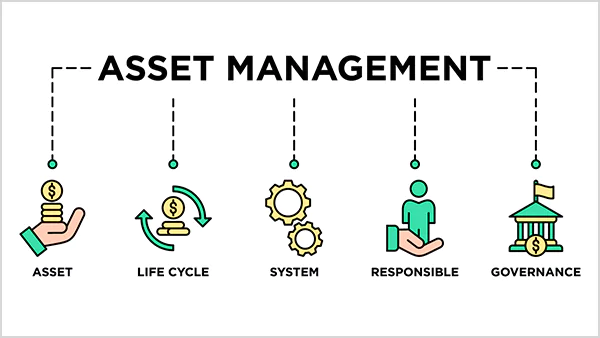
Asset management is the practice of balancing costs, and investing and optimizing assets to maximize value and performance over time. It involves investing in stocks, bonds, real estate, physical assets, such as equipment and property, and intangible assets such as intellectual property to increase value and returns while managing risks for clients.
The objective is to grow long-term value through portfolio management, research, and advisory services tailored to business goals. Asset managers, also known as portfolio managers or financial advisors, manage assets based on the client’s risk tolerance and revenue goals.
Furthermore, effective asset management (AM) supports financial predictability through:
- Reduce wastage and unexpected asset losses due to failure.
- Improve budget accuracy (minimizing costs and optimizing long-term ROI).
- Predicting future market trends and economic conditions to make informed decisions.
Let’s understand the role of asset managers thoroughly in the next section!
What is the Role of Asset Managers?
Asset managers’ or financial advisors’ role is to determine where, when, and how to invest in assets to maximize individuals’ or companies’ profits.
The investment they offer may include stocks, shares, bonds, real estate, commodities, mutual funds, and other alternatives. Just as businesses rely on bookkeeping services to keep their records clean, asset managers rely on precise data to ensure that every investment aligns with your long-term goals.
On the other hand, the tasks of asset managers have increased day by day, including evaluating asset performance, operational goals, creating broader business strategies, and aligning proper use.
In simple terms, they act as fiduciaries, focusing on maximizing short-term efficiency to create long-term benefits without risking asset value.
Note: Fiduciaries are individuals or institutions that legally or ethically manage money or property in their clients’ interests.
Also Read: Remittance Tax Explained: Meaning, US Rules, Rates, and Exemptions
What are the Different Types of Asset Managers?
There are four different types of asset managers, such as a registered investment advisor, broker, financial advisor, and robo advisor.
Always remember that each type of manager has different responsibilities, so it’s obvious to understand them in great detail. Let’s take a look!
1. Registered Investment Advisor
A registered investment advisor (RIA) is a firm that recommends secure trades to clients and manages their portfolios for a fee. Registered with the SEC or state authorities, RIAs are legally required to act as fiduciaries, prioritizing your best interests.
2. Broker
A broker acts as a middleman for you in buying stocks and other securities. Much like firms that handle year-end accounts services, a good broker must be transparent about all fees and potential risks.
3. Financial Advisor
A financial advisor is an individual or firm that provides recommendations for buying stocks and bonds based on their expertise. Similar to a broker, they do not act as fiduciaries. But they are experts in other fields, including tax accounting or estate planning.
4. Robo Advisor
As the name suggests, a robo-advisor is a computer algorithm that automatically builds, controls, and manages your portfolios. It is the most affordable type of asset manager because there is no human involved in the process.
Fast Fact: The robo-advisor market is expected to grow from USD14.08 billion in 2026 to USD102.03 billion by 2034, according to Fortune Business Insights.
After acquiring knowledge on what is asset management, the role, and the different types of asset managers, you are all set to acknowledge how it works in the next section.
How Does Asset Management Work?
Asset management works in a lifecycle of maintaining effective client relationships, allocating assets and strategy, executing buying and selling, and using technology to monitor and report updates.
Here are the following steps for how asset managers work in the administration of assets.
1. Maintaining Effective Client Relationships
Healthy client relationships are the center of effective asset management. Managers should meet with clients and enhance communication to have an idea about their financial goals, risk tolerance, investment budget, and time.
Additionally, they should provide a transparent fee structure, updates regarding investments, and ongoing alignment with client goals to build stronger relationships.
2. Allocating Assets and Strategy
After inquiring about the client’s financial goals and risk tolerance, they can create a tailored investment strategy. Selecting the combination of assets, like stocks, bonds, real estate, and alternatives, is designed to achieve the best profits or higher returns.
3. Executing Buying and Selling of Assets
Asset managers use their discretion to buy or sell securities on behalf of their clients to keep up with the planned strategy. For growing companies, this level of oversight is as critical as maintaining proper cash flow management service protocols.
4. Using Technology to Monitor and Report Updates
Ultimately, technology plays a critical role in managing and investing assets. It enables accurate data reports, monitors market fluctuations, and provides real-time visibility to make informed decisions. Automated features reduce errors and manual efforts to analyze overall performance.
What is the Cost of Asset Management?
The cost of asset management is based on the expertise, system, portfolio, and oversight required to manage your securities. It is important to understand these cost structures, as asset managers have a variety of fee schemes.
When you factor in your total operational budget, including payroll services, understanding the percentage of assets under management (AUM) is crucial. Industry averages for these fees typically range from 0.20% to over 2.00% annually.
According to the most common model, asset management costs typically:
- Range from 0.20% to over 2.00% of assets under management (AUM) annually, with the industry average of 1% for up to $1 million.
- These fees cover your portfolio management, research, and other administration.
Warning Alert:
If your firm or manager is a fiduciary, they are legally obliged to recommend investments that align with your financial goals. If they are not a fiduciary, they may suggest inappropriate asset purchases. That’s why it is significant to know if your asset manager is a fiduciary before hiring their services.
A Detailed Example of an Asset Management Company
Here is the case study that illustrates how an asset management company works and handles its clients’ portfolios.
For example, UpGrow Consulting Firm (an asset management company) manages a large-scale institutional portfolio for a U.S. public pension fund.
| Client |
|
| Challenges |
|
| Asset Manager’s Solution |
|
| Outcome |
|
Note: This example is for information purposes only. If you desire to build a strong portfolio and manage assets, you should contact an asset management company or firm.
What is the Difference Between Asset Management and Wealth Management?
Asset management primarily focuses on growing a portfolio of investments (stocks and bonds) to maximize returns. On the other hand, wealth management is a comprehensive approach that deals with assets and liabilities, tax planning, corporate accounting, retirement strategies, and gifting.
Here is the comparison table of both professional services.
| Feature | Asset Management | Wealth Management |
| Purpose | Manage and grow investment portfolios on behalf of an organization. | Protect and grow total net worth and provide comprehensive financial planning across assets and liabilities for account management. |
| Scope | Narrow: Focus on investments and securities. | All-inclusive: Manage investments, taxes, real estate, and retirement. |
| Client Types | Institutions, organizations, pension funds, sovereign wealth funds, and high-net-worth individuals. | High-net-worth individuals and families. |
| Main Goal | Investing in stocks, mutual funds, and real estate to maximize returns. | Manage long-term financial security and legacy. |
| Services Offered | Portfolio construction, rebalancing, research, and investments in assets. | Investment management, financial planning, estate planning, budgeting, tax, and trust considerations. |
| Approach | Tactical and performance-driven. | Strategic and client-centric. |
| Fees/Costs | Percentage of AUM (Assets Under Management). | AUM, flat fees, or retainer models. |
| Fiduciary Duty | Varies: It is generally based on the types of asset managers. | Typically, a high fiduciary duty. |
Wrapping Up!
On the whole, asset management is the process of investing and building assets to maximize returns for long-term stability. It involves the buying and selling of assets or securities on behalf of clients, executed by asset managers.
However, it is advised to opt for an asset management company or a manager who works as a fiduciary. By hiring legal and ethical advisors, you can strategically achieve your financial goals and build strong portfolios.
Also Read: What is a CD Account? How Do CDs Work and How to Open Them?
Frequently Asked Questions
Ans: Asset management is a professional and systematic way of maintaining, operating, and buying/selling assets to maximize their value and performance while minimizing risk levels.
Ans: An asset manager is a financial professional who allocates assets, analyzes market trends, and executes buying/selling as a fiduciary to maximize returns while reducing risk.
Ans: Yes, asset managers charge 1% fees on the amount invested in securities. Additionally, some asset management firms make money through performance fees as a bonus after completing targeted goals.
Ans: The 5 P’s of asset management include:
- Planning
- People
- Process
- Portfolio
- Performance
Sources: