Cash Flow Management for High-Volume Logistics Operations

The demand for high-volume logistics businesses never decreases, but still, many of them fail. You know why? Simply because of bad cash flow management.
You’d be surprised to know a U.S. Bank study claim that, all in all, 82% of businesses fail just due to poor cash flow management.
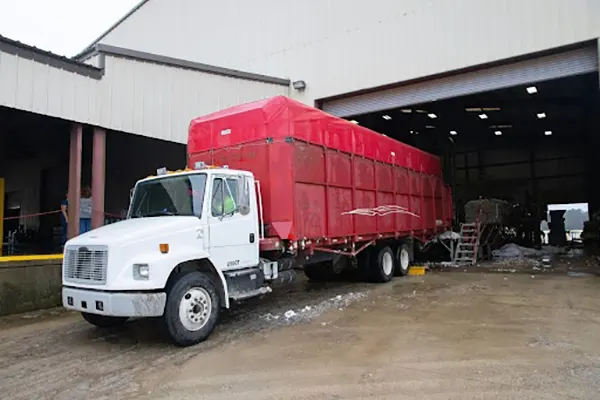
When goods move constantly, invoices also pile up quickly. In addition, payment cycles are also slow as costs hit before revenue.
High-volume logistics businesses stay under constant stress to stay profitable.
For finance specialists, high-volume logistics presents specific challenges. The data is pretty clear on paper, but the scale and complexity of operations are still scary.
Managing cash flow here will require you to know the nitty-gritty of on-ground logistics reality. And in this article, I will inform you about exactly that. So, let’s get started.
KEY TAKEAWAYS
- Many high-volume logistics businesses fail due to poor cash flow management.
- High-volume logistics businesses require high upfront operational costs, while revenue payments take some time.
- Due to high real-world and people-to-people interactions, the predictability of the operations is very low.
- Cash flow is majorly impacted by: Shipping containers, fleet and equipment, as well as warehousing and storage.
Why Logistics Cash Flow Behaves Differently
There are thin margins and heavy throughput in a Logistics operations business.
And when operations are quick and volumes are high, small inefficiencies multiply pretty quickly.
High-volume logistics businesses incur daily costs on:
- Fuel
- Labour
- Equipment
- Warehousing
- Maintenance
Meanwhile, customers might pay 1-2 or even 3 months after you provide the services.
This mismatch between outgoing and incoming cash is structural. It cannot be solved by cutting costs alone. It must be managed deliberately.
Before tools or tactics are introduced, the first step is recognising that logistics cash flow is operationally driven, not just financially recorded.
Revenue Looks Predictable — Until It Isn’t
On the surface, logistics revenue appears stable. Contracts are recurring. Volumes are forecasted. Routes are scheduled. But the payments are actually received much later.
In a high-volume logistics business, delays are common due to:
- Disputes
- Paperwork errors
- Proof-of-delivery issues
- Customer-side processing bottlenecks
Each delay stretches working capital further.
Accounting systems need to track not just billed revenue, but collectable revenue. Ageing reports are essential, but they are only useful if paired with operational insight into why invoices are slowing down.
Cost Pressure Hits Early and Often
Most of the businesses work on advance payments, but high-volume logistics businesses majorly absorb their upfront costs by themselves. Such as:
- Fuel is paid immediately.
- Drivers are paid weekly.
- Equipment requires constant upkeep.
- Storage and port fees accumulate.
All this goes on regardless of client payment timelines.
This is where many high-volume operators misjudge risk. Profitability does not equal liquidity. Effective cash flow management begins with mapping cost timing, not just totals.
Operational Levers That Influence Cash Flow
Cash flow in logistics improves when accounting and operations are aligned. The following areas in the high-volume logistics business particularly impact its cash flow.
Shipping Containers
Shipping containers are a business asset, but they are also a cash flow variable. Owning containers gives you long-term control but also ties up the capital. Leasing is an option to reduce the upfront costs, but then comes the recurring costs that scale with volume real quick.
For a better cash flow, you need to utilize this asset efficiently. Idle containers don’t add to revenue but still depreciate if owned, or payments still go if leased. Their storage incurs additional expenses.
Improper container review can also cost you unnecessary replacements, penalties, or loss.
The accounting team needs to sit with the operations team to understand the following things clearly:
- Container turnover rates
- Dwell times
- Recovery processes
These metrics directly affect working capital efficiency.
Fleet and Equipment Cycles
Vehicles, forklifts, and other handling equipment require continuous care and maintenance. Ignoring malfunctioning equipment or postponing repairs might save you some cash now, but it often leads to urgent and larger expenses later.
Just keep some cash aside for preventive maintenance.
If you were not doing it before, it might raise some short-term expenses but eventually lead to a more stable cash flow in the long term.
Instead of fixing things only when they break down, just model equipment lifecycles to forecast maintenance and purchasing costs.
Warehousing and Storage Commitments
Storage costs eat up a big chunk of operational cash.
This is common while the business volume spikes suddenly after a slow period, and your focus completely shifts to fulfilling orders.
Long-term warehouse contracts offer cost certainty but reduce flexibility. Short-term arrangements improve responsiveness but often cost more.
Cash flow planning should factor in seasonal storage variability rather than assuming flat monthly costs.
Payment Terms and Client Structure Matter More Than Volume
High-volume logistics firms are in the business of throughput, so they don’t usually prioritize payment discipline. This can create exposure when a small number of large clients control a significant share of receivables.
Diversification of clients helps, but so does disciplined credit management. Clear payment terms, early escalation of overdue invoices, and alignment between service delivery and billing documentation reduce delays.
Accounting teams should resist the temptation to treat late payments as “normal for the industry.” Normal does not mean healthy.
Forecasting Beyond the Ledger
Traditional cash flow forecasts based on just accounting data don’t quite work with logistics businesses. Effective forecasting incorporates operational inputs.
Expected shipment volumes, fuel price trends, maintenance schedules, and contract renewals should all feed into cash projections. This requires collaboration between finance, operations, and procurement.
When forecasts reflect reality, funding decisions become proactive rather than reactive.
STRATEGIC INSIGHT
Credlix recommends that logistics companies maintain a cash reserve equivalent to their 1-3 months of operational expenses to cushion against unexpected costs.
Funding Tools as Support, Not Solutions
In high-volume logistics businesses, invoice financing, asset-backed lending, and overdrafts are pretty common. They smooth out gaps, but in some cases, they can just be bandages masking structural problems.
The role of accounting is to ensure these tools support operations rather than replace discipline. Financing should align with receivables quality and asset utilisation, not compensate for weak controls.
Why Accounting Insight Is Critical in Logistics
The operations of a high-volume logistics business are pretty complex, but predicting its financial risks is still considerably feasible. Cash flow strain tends to come from known pressures: delayed receivables, front-loaded costs, underutilised assets, and weak alignment between operations and finance.
When accounting teams understand how logistics actually functions — from container turnover to fleet cycles and warehousing commitments — cash flow management becomes a control system rather than a reaction. The goal is not to eliminate volatility, but to anticipate it, plan for it, and keep the business liquid while volume scales.
In logistics, growth without cash control is fragile. Strong accounting discipline is what allows high-volume operations to expand without putting their balance sheet under constant stress.
Ans: In high-volume logistics, upfront capital is pretty high while client payments are quite delayed.
Ans: Main areas with cash flow bottlenecks in a high-volume logistics business are containers, fleet, and equipment, in addition to warehousing and storage.
Ans: For a better cash flow, high-volume logistics firms can automate freight invoicing and leverage invoice factoring.