How to Secure Your Retirement as a Small Business Owner


“Don’t simply retire from something; have something to retire to.”
— Harry Emerson Fosdick (American Pastor)
In a regular job, the timeline is usually fixed for retirement. But the case is not the same with people who run businesses. The intoxication of business is such that once you get into the groove, you don’t even think about retiring.
Big companies have a proper succession structure, but small businesses have nothing like that. As a solopreneur, you always know that you won’t have enough energy to keep running your small enterprise forever. Eventually, it’ll be the time of retirement.
Nearly four out of ten Americans aren’t sure about their old-age corpus. Things are worse with small business owners who don’t even have employer-funded retirement providence.
Hence, planning for the future becomes a necessity. Starting with fixed annuities now is a good idea. Fixed annuity rates stay relatively stable, giving out dependable returns to safeguard your final years. There are many other options as well.
In this guide, I’ll list some of the best instruments to invest in so that your savings corpus can fund your golden years to be spent in peace, with no worries regarding money.
KEY TAKEAWAYS
- Running a small business can leave you with no time to plan your retirement.
- But starting to invest now to build an old-age corpus is a good idea.
- Set up SEP IRAs or solo 401(k)s for consistent growth.
- Build up a diversified portfolio with dividend-based instruments and fixed annuities.
Set Up a SEP-IRA or Solo 401(k) for Consistent Growth
You’re a small enterprise owner, not a regular Joe with a job. There’s no retirement corpus being built behind your back. You have to do that by yourself, putting in each dollar for your future consciously.
A SEP-IRA is simple to open, easy to maintain, and allows contributions of up to 25% of your net self-employment income annually. A Solo 401(k) goes a step further, allowing both employee and employer contributions, which pushes your annual contribution ceiling considerably higher.
Both accounts grow tax-deferred, meaning you only pay taxes when you withdraw in retirement, not while your money is compounding. The key is consistency. Contributing a fixed amount every single month, regardless of how business is going, builds an old-age fund that grows steadily over time.
Build a Dividend-Based Investment Portfolio for Steady Income
Dividends feel like a salary that you get regularly. And, you don’t even need to slog for a month; you just have to own some valuable financial assets. So, start working on building a dividend portfolio now.
Dividend-paying stocks are shares in companies that distribute a portion of their profits to investors on a regular basis. Many of the most reliable dividend payers have been doing this consistently for decades, through recessions, market crashes, and everything in between.
The beauty of this approach is two-fold. Your portfolio will keep growing in value over time, while simultaneously generating income you can live off in retirement. Reinvesting dividends during your working years accelerates that growth even further.
Focus on sectors like utilities, consumer staples, and healthcare, which have historically delivered reliable dividends regardless of broader market conditions. Starting early gives your dividend income the time it needs to grow into something genuinely substantial.
Diversify Your Retirement Portfolio Against Tariff Uncertainty
Trump’s sweeping new tariffs have shaken up the foundation of how small businesses used to operate. Expensive supply chains, changing pricing structures, and tight cash flows. Projected profits are taking a hit as well amidst the chaos.
Nearly 85% of small business owners are worried tariffs will directly impact their bottom line, per a report shared by Business Wire. Financial pressure like this has a sneaky way of bleeding into personal savings when business gets tough.
The smartest move right now would be to keep your retirement portfolio as diversified as possible. One bad economic season should never be able to unravel years of careful saving. Here is what a well-diversified old-age portfolio looks like in practice:
- Stocks and bonds: A balanced mix cushions your portfolio when one asset class takes a hit during economic turbulence.
- Gold and commodities: These tend to hold their value well when inflation rises, and trade policies create market volatility.
- A self-directed IRA: This gives you access to non-traditional assets like real estate, private equity, and commodities, well beyond what a standard IRA allows.
- Defensive sectors: Utilities, healthcare, and consumer staples tend to stay stable even when broader markets get rattled by policy changes.
Rebalancing your portfolio at least once a year keeps your allocation aligned with where the economy is actually heading.
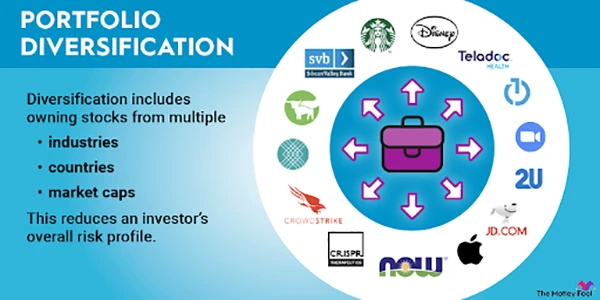
Portfolio diversification is really simple as described in the following infographic:
Invest in Fixed Annuities to Beat Inflation
Inflation eats into your corpus over time. The Q1 2025 Small Business Index showed that many small businesses named inflation as their biggest financial concern, even as overall business confidence is dipping. That worry makes complete sense.
J.P. Morgan Global Research predicts global core inflation to hold steady around 2.8% through 2026. On a retiree’s fixed savings, that percentage compounds into a significant loss of purchasing power over a decade or two.
A fixed annuity directly addresses this by locking in a guaranteed interest rate, protecting your retirement income from inflationary pressures in a way a standard savings account simply cannot.
However, annuity rates can differ quite dramatically from one product to the next, so shopping around is non-negotiable, adds AnnuityAdvantage. Besides the headline rate, pay close attention to the interest guarantee term and all other product features before signing anything.
Getting a competitive rate today builds a considerably stronger income base for the years ahead.
Retirement is a Goal Worth Protecting
Putting on a lot of hats while running a business all your life can leave you with no time to plan your future finances. To have a peaceful old age without any money problems, you don’t need a massive windfall or a perfect economy.
It requires a plan, some patience, and a willingness to stay the course even when things get bumpy. You have already proven you can build something lasting. Your retirement is no different, and you are more capable of securing it than you might think.
Ans: They don’t, letting their savings be eaten by inflation.
Ans: Inadequate planning, which includes underestimating inflation and healthcare costs, and investing too late.
Ans: Go for Solo 401(k)s, SEP-IRAs, or Defined Benefit Plans.