Seeworld Ad Scene Planning: Judge Scale, Distance, and Composition


Advertising scenes must clearly convey products but at the same time keep enough environment to convey meaning and context. Even the best frame can fail because of scale, distance, or composition, which detracts from the message. Spatial planning helps to link products, people, props, architecture, and backgrounds before detailed treatment of visuals is given. This 3D world-model concept that has been reported here could aid that planning process via navigable spatial scenes. But the idea is not yet available, so any power should be taken with a grain of salt. Throughout this planning process, Pippit offers practical tools for developing advertising stories, scenes, characters, and promotional content.
- Why Scale Is an Advertising Decision
- Distance Determines More Than Depth
- Composition Becomes Easier When Everything Shares One Space
- Six Advertising Variables to Inspect Before Final Generation
- Steps to Seeworld Ad Scene Planning: Judge Scale, Distance, and Composition
- Testing Camera Perspective Before Locking the Shot
- Conclusion
Why Scale Is an Advertising Decision
Scale is important for credibility since viewers are comparing products to familiar objects, people, rooms, vehicles and architecture. For instance, a bottle next to a table must be in proportion to be recognised at a glance. There is also a difference in physical size and visual prominence: smaller products can still get the attention. One object can be more visually powerful than larger elements through placement, contrast, framing, lighting, and camera perspective. This difference is significant when multiple elements are present in the generated scenes by an AI video generator. These relationships can potentially be easier to inspect in a connected spatial scene prior to final rendering. Pippit facilitates the development of advertising through a combination of product visuals, characters, scene media, and directed creative decisions.

Distance Determines More Than Depth
The reported Seeworld concept emphasizes the connected 3D space, and distance becomes an issue in the case of advertising previsualization. Distance: When a distance is too far, details of a product could be out of reach to see. It also alters hierarchy, as in a camera frame, closer objects tend to look stronger. Depth relies on the layered distances of foreground subjects, elements in the middle ground, and the distance of environmental structures. The camera moves back, putting more in the frame and less of the product in the frame, thus expanding the context. Apparent size can also be altered by perspective, particularly if the camera is closing in on large foreground objects. These relationships are relevant in all kinds of product ads, promotional scenes, storyboards, campaign visuals, and any other visuals that demand consistent spatial logic.

Composition Becomes Easier When Everything Shares One Space
Deliberate spatial relationships are best suited for advertising compositions between products, characters, props, architecture, and background. A shared scene allows creators to examine those relationships, as opposed to making judgements about individual assets out of context. Pippit’s Creative Canvas facilitates this with a combination of product images, scene video, audio, and characters. Prompts can outline product context, subject appearance, setting, lighting, camera angle, style, voice tone, and mood. Once roles and production components have been clearly defined, batch generation then helps develop multiple advertising episodes. Spatial previsualization is still important, as most of the time, if something changes early on, it will impact a number of related elements at once. A structured scene also ensures that negative space is preserved for headlines, logos, calls to action, or campaign messaging.
Six Advertising Variables to Inspect Before Final Generation
- Product Scale: See if the product is noticeable without making other objects look too small in comparison.
- Camera Distance: Analyze the impact of framing on product detail, context, and environmental storytelling for each planned shot.
- Subject Spacing: Leave sufficient space between people, products, and props to keep them visually separated.
- Background Weight: Avoid distracting the audience with details in the background of the image that are not supposed to stand out.
- Depth Layers: Organize foreground, middle ground, and background features so that they provide a comprehensible spatial structure.
- Composition Balance: Allow space for product messaging, titles, logos, or other campaign elements to be intentional.
Steps to Seeworld Ad Scene Planning: Judge Scale, Distance, and Composition
Step 1: Establish the Advertising Scene
- Start with “Story Studio” to plan advertising scenes while considering scale, distance, framing, and composition.
- Sign up for Pippit using Google, TikTok, or Facebook account information to access creative tools.
- Open “Story Studio” from the left vertical menu bar on the home page to begin planning.
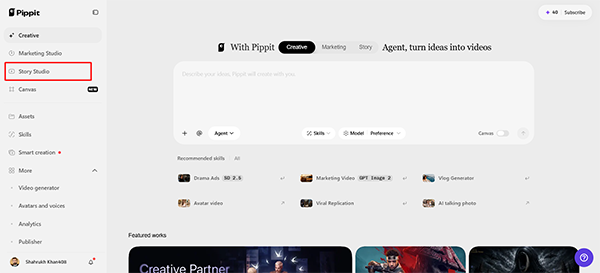
- Upload an existing script through “Upload script”, or enter scene direction through “Paste script” directly.
- Use “AI scriptwriter” from the top menu to develop advertising scripts with clear spatial relationships.
- Choose a suitable direction through “Style library” to support consistent composition throughout your planned advertisement.
- Open “Default ratio” to select your aspect ratio, then use “Episodes” for multiple advertising scenes.
- Finally, click “Generate” so AI can create the initial structure for reviewing spatial choices.

Step 2: Plan Advertising Production Assets
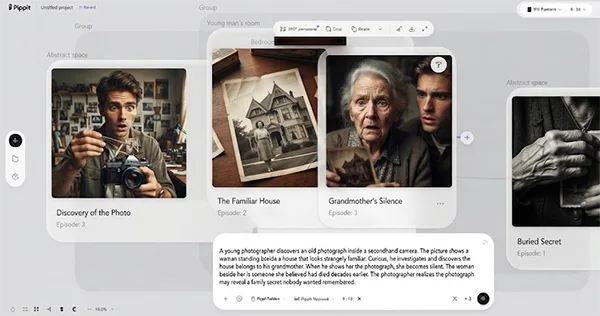
- Build advertising assets inside “Creative Canvas” by adding images, scene videos, audio, and characters.
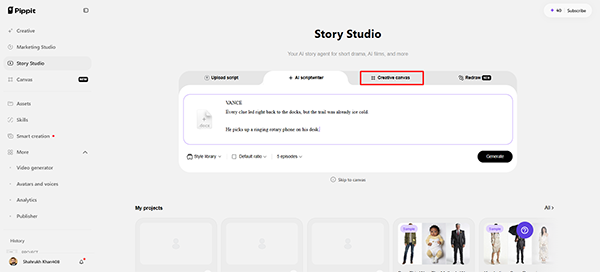
- Create focused prompts covering character look, setting, lighting, camera angle, style, voice tone, mood, or context.
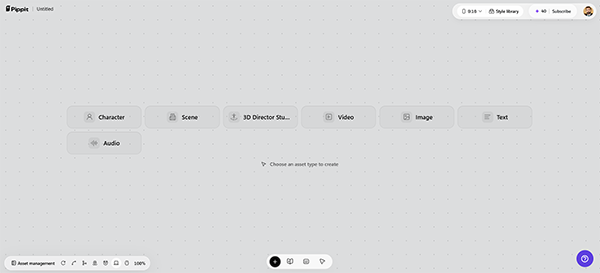
- After preparing roles, generated characters, and scenes, click “Batch generate” to generate your episodes together.
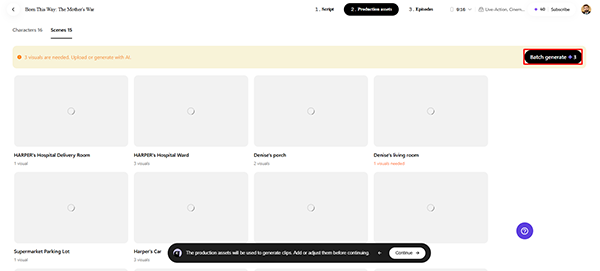
Step 3: Review Composition and Export
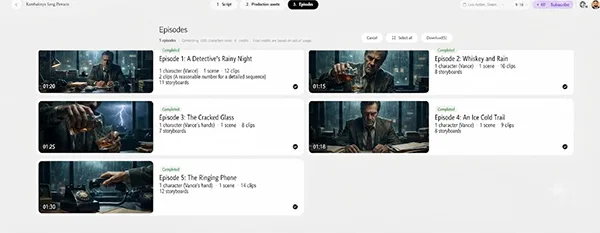
- Review and edit characters, roles, scenes, and audio before refining each advertising episode for delivery.
- When satisfied, click “Select all”, then choose “Download” to save generated episodes to your device.
Testing Camera Perspective Before Locking the Shot
Spatial issues can be hidden in one angle and revealed in the other. When testing a number of views, you can uncover awkward overlaps, lack of product visibility, and competing background elements. Use changes in camera height to affect product scale, authority, and environmental relationships. Try different camera angles to see if any foreground objects are blocking out key product information or causing distracting lines. Test the camera for close-up or distance to check the readability of the product versus environment storytelling. Test framing to retain valuable negative space for ad copy, branding, or visual breathing room. This process might benefit from the reported game-like spatial perspective, enabling creators to look at related scenes. Pippit adds that concept to thinking with directed scene development, which uses prompts and Creative Canvas to arrange advertising components.
Conclusion
An ad is not just a bunch of individually created pieces; it’s a spatial composition. Scale creates realistic relationships, and distance determines readability, hierarchy, depth, context, and perspective. Then, composition ties those decisions together in a frame that serves both product focus and campaign messaging. If the capabilities of the described world-model concept make it available to users, this concept might be useful for connected 3D planning. Pippit can be used to support practical advertising development using Story Studio and Creative Canvas as part of current content workflows. Spatial planning also minimises the number of late changes, as large-scale relationships are addressed first before the visual details are refined. If space is used first, subsequent styling choices can reinforce the message rather than muddy the conceptual waters.