What is W3 Form? Meaning, Purpose, Filing Process, And More

Knowledge of the W3 form is important to all employers operating payroll. Even though the majority of the staff are conversant with Form W-2, not many people know about Form W3, which is an annual summary of all the W-2 forms that are issued by the employer. Many businesses rely on professional payroll accounting services to ensure these summaries are accurate and compliant.
This guide will help you understand the meaning of w3 form, its purpose, whol files the form, its locations, and deadlines.
What is a W3 Form?
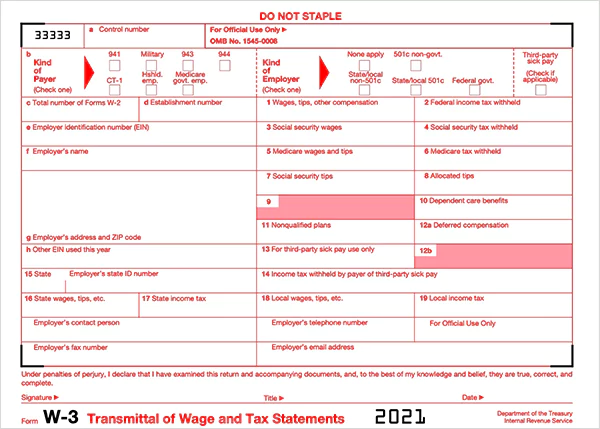
The W-3 form is a brief report that employers file with the Social Security Administration (SSA). It sums up all amounts that are reported on all the W-2 forms of all employees in the year. For those using specialized accounting service for startup companies, this form is a critical year-end requirement. Rather than reporting on wages separately, it reports a combination of:
- Total wages paid
- Social security wages
- Medicare wages
- Federal income tax withheld
- Social security and medicare taxations withheld
Simply stated, a W-2 will list the earnings of a single employee, whereas a W 3 form lists the total earnings of all employees combined. This is often part of the broader bookkeeping services provided to maintain clean financial records. The SSA uses this to validate payroll information and up-to-date records of earnings.
Difference Between W-2 and W-3
Even though Form W2 and Form W3 are closely related as far as the payroll reporting is concerned, they have different functions. Proper year-end accounts services ensure both forms are reconciled perfectly before submission.
The difference between W-2 and W-3 is clearly detailed below:
| Aspects | Form W2 | Form W3 |
| Purpose | It reports the annual wages and taxes for each employee in the firm. | It summarizes the wages report of the total number of all employees. |
| Reporting | It is at the individual level. | It is employer-level summary reporting. |
| Who Prepares It | Employer for each employee. | Employer as a summary of all the W-2 forms. |
| Who Receives It | SSA | SSA |
| Information Included | Employee name, Social Security number, wages earned, and taxes withheld. | Employer EIN, total wages paid, and total taxes withheld for all employees. |
| Use for Filing | To file personal income tax returns. | Used for payroll verification only. |
What is W-3 Form Used For?
The w-3 form is a document that compares employers with the federal government. Maintaining healthy cash flow management service standards involves tracking these tax withholdings accurately throughout the year.
Its main objective is to make sure that:
- The wages that are reported to the employees equal the ones that are reported to the government.
- Contributions to Social Security and Medicare are duly registered.
- The aggregate amount of taxes collected is correct.
The SSA makes comparisons between the W-3 totals and the W-2 forms filed. When these figures are dissimilar, either a correction request or a penalty will be issued.
Further, the correct W-3 reporting makes employees earn the right credit for the upcoming Social Security payment. Such minor mistakes in reporting can have an impact on the calculation of benefits in the later stages of life.
Who is Required to File Form W-3?
Not all businesses file a W-3 form. This is mandated for employers who are issuing the form W2 to the employees.
You must file a W3 if:
- You paid wages in which you withheld federal income tax.
- You did not pay Social Security or Medicare taxes.
- You had provided at least one W-2s in the tax year.
- You are either a business owner, non-profit corporation, or government employer with payroll requirements.
- You will need to file Form W-3 with W-2 even if you have an employee of one.
- W-3 reporting does not apply to independent contractors who are provided with Form-1099-NEC.
When is Form W-3 Due?
Form W-3 has a filing date of January 31 of the year after the tax year in which it is reporting.
For example:
- W-3 form 2024- Due by January 31, 2025.
- Such a deadline is applicable regardless of whether you are filing:
- Electronically
- By paper submission
- In case January 31 is a federal holiday or a weekend, the deadline will be moved to the next working day.
- Depending on the time of the late filing, one might face penalties from the Internal Revenue Service.
How to File Form W-3?
Submission of the W-3 form can be done electronically or on paper.
Step 1: Prepare All W-2 Forms
Make sure that you have all the W-2 forms of every employee before preparing the W-3.
Step 2: Calculate Totals
Adding all the W-2 forms, including:
- Wages
- Federal income taxes withheld
- Social security wages
- Medicare wages
- Taxes imposed on Social Security and Medicare.
Step 3: Complete Form W-3
Now you need to add all the totals in the W-3 form. The correction notices can be occasioned by the small deviations.
Step 4: Submit to the SSA
Electronically file via the portal of the Social Security Administration, Business Services Online, or submit a red-ink form in case of paper filing.
Electronic filing is usually quicker, less risky, and minimizes the chances of making an error.
Also Read: Purchase Price Variance: Importance, Formula, Examples, Affecting Factors, and Much More
E-Filing Vs Paper Filing
The employers are now being obliged to submit w3 electronically because:
- It is faster
- Has fewer chances of errors
- Automatic w3 generation
- The confirmation is provided immediately.
Paper filing, on the other side, is done on the official scannable red-ink forms. It has slower processing and increased chances of rejection as a result of errors.
Those employers who prepare 10 or more information reports are generally expected to e-file to reduce the burden of processing and errors from their shoulders.
Penalties for Late or Inaccurate Filing of W-3
Any mistakes in filing Form W-3 properly or submitting it late may lead to financial consequences.
Penalties may apply if:
- You filed after the deadline.
- Totals do not match W-2 forms.
- Your filing requirements are deliberately ignored.
- Wrong taxpayer identification numbers are reported.
- The larger the time of delay, the greater the penalty.
- Other than financial fines, faulty reporting can also lead to problems with employees’ social security files and Tax Identification Number (TIN).
Mistakes to Avoid When Filing W-3 Form
Most employers commit unnecessary mistakes in the preparation of the W-3 form. Common mistakes include:
- Totals of form W3 are not matching W-2 forms.
- Calculating wrong wages by mistake or deliberately.
- False employer identification number (EIN)
- Missing required fields and signature.
- Pre-checking balances before filing tremendously eliminates correction requests.
How Form W-3 Affects Employees?
Although the W3 form does not reach out to the employees directly, it is a vital element in safeguarding the financial and retirement records of the employees.
- Assures Proper Records of Earnings: The amount to be paid on all W-2 forms is checked by the Social Security Administration using Form W-3. This is useful in ensuring that the earnings of employees are properly defined in the federal system.
- Secures Future Benefits to Social Security: When the wage totals are misreported on the W3, it can lead to inconsistency in the earnings pattern of the employee. In the long term, these errors may have the effect of cutting retirement, disability, or survivor benefits. Through proper filing of Form W3, employers contribute to the protection of future payments to employees to Social Security.
- Technology Backs Up Medicare Contribution Records: Total Medicare wages and taxes withheld are also validated under Form W-3. Effective reporting will make sure that Medicare payments are well recorded to be used in the future as a healthcare benefit.
- Encourages Payroll Transparency: The W-3 is used as a compliance gateway. It makes sure that the employers leave the correct wage amounts and tax withholdings, and employees are not affected by poor reporting.
Final Thoughts
The W3 form is not as popular as the W-2, but it is also a significant concern to the employer. It provides accuracy, transparency, and compliance in payroll reporting.
When you are filing Form W-3, you must include employees in your business who are issuing W-2s. With this correctly understood and well-prepared document, it may be possible to avoid the penalty and provide the correct reporting of the wages to the business and to the employees.
Also Read: UK Tax Year: A Branded Guide to Stay Compliant with Tax Regulations
FAQs
Ans: The W3 form is a summary of all the issued W2 forms of an employer that lists wages and taxes withheld and sends it to the Social Security Administration.
Ans: Form W3 is available on the IRS or SSA websites and can be downloaded by employers or created using payroll software.
Ans: The responsibility of employers who provide W-2 forms involves filing Form W-3 with the SSA.
Ans: No, employers submit Form W3 only; employees are issued Form W-2.
Ans: The W3 form is used by businesses, payroll departments, accountants, and employers in reporting the amount of combined annual wages and tax to the government.
Sources